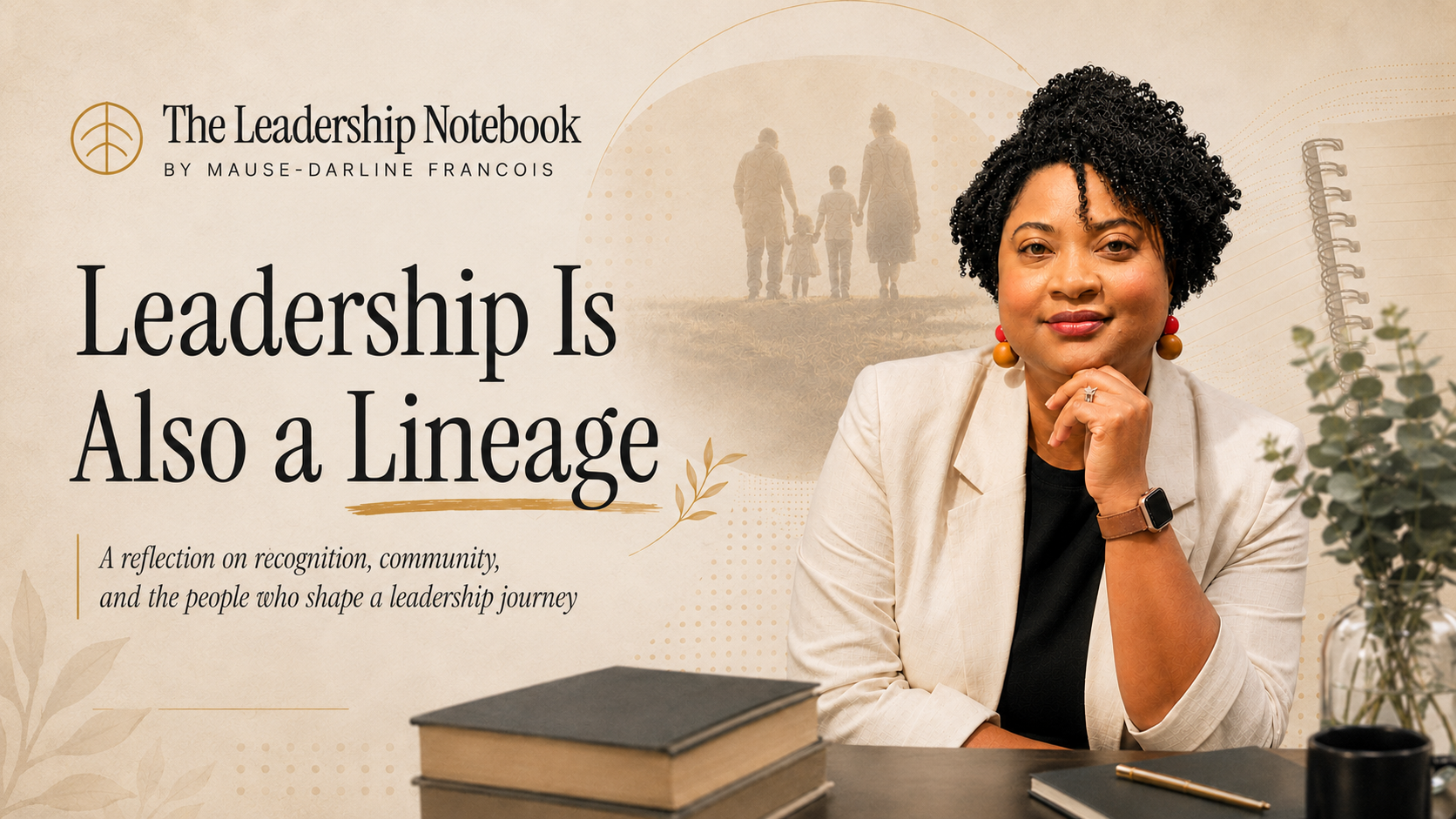
Leadership is often presented as an individual journey. We associate it with a person’s vision, courage, decisions, and accomplishments. When someone receives recognition, attention naturally goes to the name, the position, or the visible result.
But very few leadership journeys are built by one person alone.
Leadership develops within a much larger environment. It is influenced by the opportunities available to us, the barriers we encounter, the institutions we enter, and the social and professional realities in which we live and work. It is also shaped by the values, encouragement, trust, and examples that one generation passes to another.
Even when recognition carries one person’s name, the journey behind it often reflects a much broader history.
I was reminded of this when I learned that I had been named as one of the 24 members of MIUSA’s inaugural Global Fellows cohort.
At first, I felt grateful for the recognition. Seeing my name among the profiles of the other Fellows then made me pause. It led me to think not only about what I had accomplished, but also about the journey behind it and the many people, communities, experiences, and opportunities that had shaped that journey.
As I read the profiles, I was also struck by the different ways leadership can develop. It can begin in a community organization and later influence national policy. It can grow from lived experience and become professional expertise. It can move from advocacy into public service, from local action into international spaces, and then return to strengthen the communities where it began.
The Fellows’ paths are different, but one thing they reminded me of is that the moment when leadership becomes visible is not always the moment when it began.
What Recognition Does Not Always Show
When we tell the story of a leader, we usually focus on the visible part. We speak about the person’s commitment, achievements, or influence. We remember the moment when they entered an important institution, contributed to a policy, addressed an audience, received a new responsibility, or were publicly recognized.
What we do not always see is everything that helped make that moment possible.
Long before someone’s name appears in a public profile, there may have been a community that gave them space to speak, a mentor who encouraged them, a colleague who trusted them with a new responsibility, or a family that supported them through difficult transitions.
There may also have been people who challenged them, corrected them, or helped them think more clearly. Not every important influence comes through comfort. Some come through difficult conversations, unexpected lessons, or responsibilities that push us to grow faster than we expected.
When someone receives recognition, attention naturally goes to the person whose name appears. But behind that name, there is often a much larger story.
This is why I have come to think that leadership is also a lineage.
It is not only about the person whose work becomes visible. It is also about what has been passed to them, what they choose to carry forward, and what they help make possible for those who will come after them.
The moment when leadership becomes visible is not always the moment when it began.
How MIUSA Became Part of My Journey
My relationship with MIUSA began in 2016 through the Women’s Institute on Leadership and Disability, known as WILD.
At the time, I saw it as an important opportunity to learn, build relationships, and connect with women from different countries and experiences. I could not yet see all the ways that the experience would remain connected to my journey or influence how I understood leadership.
Some experiences end when a programme is completed. Others stay with us because they affect how we understand ourselves, what we believe is possible, and the role we imagine for ourselves in our communities and professional lives.
For me, WILD became part of a longer process of understanding my own voice more clearly. It helped me see leadership not only as a position or a title, but as a way of engaging with people, institutions, and ideas. It reminded me that leadership can take many forms, and that it often grows gradually through reflection, action, and responsibility.
My professional journey later took me through civil society, public institutions, and international organizations. Across these different spaces, I continued to learn that leadership is not simply about being present. It is about how we participate, how we contribute, how we build trust, and how we help create conditions in which others can also contribute.
That is one of the reasons this recognition matters so much to me. It did not feel like an isolated moment, disconnected from the rest of my life. It is part of a much longer process, shaped by learning, work, uncertainty, growth, and the influence of the many people I have met along the way.
Different Paths, Shared Lessons
One of the things that stayed with me as I looked at the other Fellows’ profiles was the diversity of their journeys.
People arrive at leadership in different ways. Some begin through community engagement. Others through education, advocacy, public service, organizing, or personal experience. Some work mainly at the local level. Others move across national and international spaces. Some lead visibly. Others lead quietly, through consistency, reliability, and long-term commitment.
The forms may differ, but there are lessons that many leadership journeys seem to share.
One is that leadership often begins before the title comes.
Another is that leadership is rarely shaped alone.
And perhaps most importantly, the deeper meaning of leadership is not only found in what we achieve for ourselves, but also in what becomes possible for others because we were there.
This is what I appreciated most in reflecting on the cohort. I did not only see individual accomplishments. I also saw the influence of communities, opportunities, and experiences that had travelled across years and borders.
Each person had their own story, but none of those stories began on the day their recognition was announced.
What We Receive From Others
Thinking about leadership as a lineage means recognizing that we inherit more than opportunities.
We inherit trust. We inherit lessons. We inherit examples. We inherit spaces that someone else helped open. We inherit values that were shaped in homes, communities, classrooms, offices, and movements long before we fully understood their importance.
We also inherit unfinished work.
Every generation benefits from what came before it, but it also faces the responsibility of carrying certain things further. Sometimes that means improving institutions. Sometimes it means questioning practices that no longer serve people well. Sometimes it means creating opportunities that did not exist before. And sometimes it simply means making a path easier for the next person than it was for us.
For me, this way of thinking changes the meaning of recognition.
Recognition still matters. It can affirm years of work. It can create visibility. It can connect a person to new communities and new opportunities.
But recognition also invites reflection.
It asks us to think about who helped make the journey possible. It asks us to remain aware that what appears to be an individual accomplishment is often built through collective trust, support, and persistence.
Recognition and Responsibility
When I saw my name on the MIUSA page, I thought about the people and experiences that had shaped my own journey.
I thought about the organizations and communities that gave me opportunities to contribute. I thought about the people who trusted me with responsibilities, including at moments when I was still developing my confidence. I thought about colleagues who challenged my ideas and helped me strengthen them.
I also thought about family members and friends who supported me through transitions, difficult decisions, uncertainty, and new responsibilities.
What appears publicly as an individual achievement is often the result of collective investment and collective trust.
Recognizing this does not reduce the value of personal effort. It places that effort within a fuller and more honest story.
It also creates responsibility.
Recognition should lead us to ask what we are doing with the access and opportunities we have received. Are we sharing knowledge or keeping it within a small circle? Are we creating space for others to contribute? Are we helping build more responsive, more open, and more inclusive institutions? Are we using visibility in a way that brings more people into the conversation?
Leadership should not be measured only by personal accomplishment. It should also be measured by what becomes possible for others because we were there.
What Leadership Leaves Behind
Thinking about leadership as a lineage changes the way I understand success.
Leadership is not only about reaching a particular position or entering a new space. What matters is what we do once we are there.
Do we create opportunities for people who may not yet have the same visibility? Do we help others grow in confidence? Do we make institutions more thoughtful, more humane, and more open to different experiences? Do we leave behind something that helps someone else move forward?
Not every contribution will appear in a public profile. Leadership may leave behind a stronger institution, an improved policy, a more thoughtful way of working, a person who feels more confident because someone trusted their ability to lead, or a space that becomes easier for the next person to enter.
When I reflect on the MIUSA Global Fellows cohort, I see individual accomplishments, but I also see the influence of relationships, opportunities, and communities that have shaped those accomplishments over time.
That is what I want to carry from this moment.
Not only gratitude for the recognition, but also a clearer awareness of what made the journey possible and what the journey now asks of me.
Leadership may carry one person’s name at a particular moment. But its real value is found in what it carries forward, what it changes around us, and what it leaves available for others.
Continue exploring the Notebook

When Good Ideas Need Time
A reflection on why good ideas are not always accepted the first time they are heard.
5 min read
An Invitation
Leave a Comment
You may respond to one of the questions below or share another thought inspired by the essay.
- Who contributed to making your leadership journey possible?
- What did those people do to support, encourage, or help shape your leadership journey?
- What, in turn, will you help make possible for others because of the opportunities you have had?